
 SEARCH
 LIST YOUR PROPERTY

Faced with a housing crisis that is intensifying in large cities like Madrid, Barcelona, or Valencia, the Spanish government has decided to take drastic measures. Since the adoption of the famous Ley de Vivienda (Housing Law), many investors had abandoned long-term rentals in favor of temporary contracts, hoping to bypass rent caps and renewal constraints. At Roomlala, we are closely monitoring these developments to best support you. In this year of 2026, the Iberian real estate landscape is experiencing a real legal upheaval that is crucial to understand.
The public authorities' objective is clear: to put an end to abuses and return properties to the primary residence market. The new decree-law, finalized in July 2026, strictly regulates the 2026 seasonal rentals (alquiler de temporada). However, beware: this hunt for speculators should not scare off individuals who simply wish to rent out an available room in their own home. On the contrary, home sharing stands out as a strong option in this new framework.
Read also: Student housing Canada 2026: What is the impact of the new cap on room rentals?, Student housing shortage in Switzerland: Homestays, a vital solution for 2026 and 2026 Student accommodation EPC: Everything you need to know about the new rental regulations in Belgium
In this article, we will decode these new rules that are reshaping the landscape of shared housing and temporary accommodation in Spain. We will explain your new obligations, how to avoid legal traps, and why hosting a tenant in your own home remains a deeply human, 100% legal, and still profitable solution for hosts.
2026 Seasonal rentals: The Spanish government's major crackdown
The Spanish real estate market is undergoing a major transformation. To understand the scale of the 2026 seasonal rental reform, one must look back at the abuses of previous years. Many multi-property owners had converted entire apartments into a series of 11-month temporary leases. This practice, which emptied neighborhoods of their permanent residents, is now directly in the crosshairs of the Ministry of Housing. The government has therefore decided to put an end to it with a series of coercive measures.
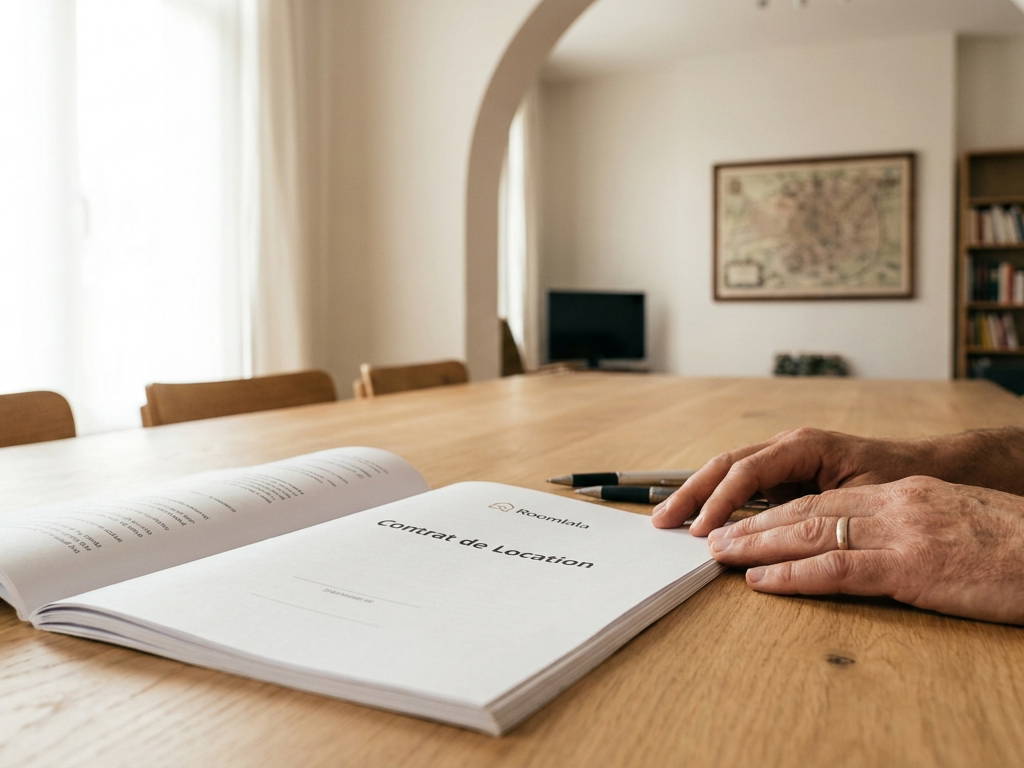
In July 2026, the adoption of the new decree-law marks a decisive step. This text closes the loopholes of the Ley de Vivienda by imposing very strict criteria to qualify a lease as temporary. It is no longer enough to write the word 'temporary' at the top of a contract to escape the obligations of a standard rental. The legislator now requires total transparency and tangible evidence justifying the ephemeral nature of the stay. For Roomlala hosts, this means you must be more precise when drafting a Spain room rental contract, but the process remains simple if you follow the rules.
This legislative offensive comes with formidable control tools. The central state, in collaboration with the autonomous communities, has set up cross-verification systems. Online listings are now being scrutinized, and financial penalties for housing law fraud have been significantly increased. Let's take a concrete example: an investor who rents an entire apartment via 11-month contracts to local families without valid justification now faces fines that can exceed 50,000 euros, depending on the region.
However, at Roomlala, we want to reassure you. These measures are primarily aimed at disguised real estate speculation. If you rent a room in your primary residence to make ends meet or to share your daily life, you are not the target of these punitive sanctions. The law protects the right to use your own home. You simply need to adopt the best contractual practices that we will detail below.
New legal obligations for hosts and tenants
Strict justification of the rental purpose
The cornerstone of the new regulations for renting rooms and temporary leases lies in justifying the purpose. Since the implementation of the new texts, the purpose of the temporary rental must be explicitly justified and proven in the contract. Whether it is for studies, temporary work, an internship, or medical treatment, the cause must be real and documented. Failing this, the contract risks being reclassified as a standard long-term residential lease (offering up to 5 or 7 years of protection to the tenant).
Let's take a common case on Roomlala: you are hosting Carlos, an Italian Erasmus student, for 9 months in Madrid. In your contract, you must explicitly mention that the rental is linked to his academic year and attach a copy of his enrollment certificate from the Complutense University. This simple action protects you completely. Likewise, if you rent to Lucia, a nurse on a fixed-term contract for the summer season, her temporary employment contract will serve as undeniable proof.
The days of vague standard contracts are over. We advise you to always request supporting documents before signing and to keep them securely. The tenant, for their part, is required to provide these documents in good faith. This mutual transparency is the key to serene cohabitation that is fully compliant with Spanish authorities.
The Unique Registry and the end of anonymity
Another major revolution is the entry into force, since July 1, 2025, of the Ventanilla Única Digital (the Digital Unique Registry). Driven by European directives and adapted by Spain, this registry requires a mandatory identification number for all temporary rentals and room rentals marketed on online platforms. The goal is clear: to fight tax evasion and identify hosts who do not declare their income.
How does this work for you in practice? Before publishing or maintaining your listing online, you must register on the government (or regional) portal, depending on current agreements, to obtain a unique registration number. This number must appear on your listing. Without this, platforms are required by law to suspend the visibility of your offer. It is an additional administrative step, certainly, but it is done entirely online and ensures the legality of your approach.
For example, Maria, a retiree in Seville who rents out two rooms in her large house, had to fill out an online form detailing her identity, the property address, and the type of rental (homestay). Within a few days, she received her identification number. She added it to her profile, thus proving to future tenants that she is a serious and registered host. It is a huge badge of trust in an sometimes opaque market.
Case law and strengthened tenant rights
The Spanish justice system has also hardened its tone against abuses. A significant piece of case law shook the sector in May 2026. The Provincial Court of Cantabria issued a historic ruling recognizing full residency rights for room tenants. In this case, an owner had divided an investment apartment into five rooms, rented out supposedly temporarily, but which in reality constituted the primary and permanent residence of the tenants.
The judges ruled that because the tenants had no other home and the contract proved no real temporary cause, it was a fraud against the law. The result: the tenants gained the right to stay in the premises under the conditions of a long-term lease (5 years), with the owner unable to evict them or raise the rent abusively. This decision marks the end of legal grey areas for speculative investors.
This is why we insist on a crucial point: never confuse dividing an investment property with renting out a room in your own home (homestay). If you share your primary residence with a tenant, the situation is radically different. Your home remains your home. The tenant of the room benefits from a common law contract (Civil Code) or a well-justified temporary lease, but they can in no way claim a right to stay in your own home.
Spain shared housing housing law: The impact of local regulations
The specific case of Catalonia: caps and controls
In Spain, housing powers are highly decentralized. While the state sets the general framework, autonomous communities have the power to apply much stricter rules. This is the case for the Spain shared housing law in Catalonia, which is a pioneer (and the most severe region) in this matter. Since January 1, 2026, the Catalan Law 11/2025 has drastically regulated rentals.
This legislation applies rent caps not only to standard rentals but also to seasonal rentals and room rentals located in high-demand residential areas (such as Barcelona or Girona). In practice, a Barcelona landlord who rents out a room can no longer set the price of their choice if it exceeds the reference index calculated pro-rata based on the room's surface area relative to the total dwelling. The goal is to prevent the sum of the room rents from exceeding the maximum permitted rent for the entire apartment.
Take the example of Jordi, who owns an empty apartment in Barcelona. Before 2026, he could have divided it into three rooms rented for 600 euros each (1800 euros in total), even though the rent for the entire apartment was capped at 1000 euros. Today, with the new law, this practice is illegal and heavily sanctioned. Conversely, if he lives in the apartment and rents out only one room to share costs, the rules are applied more flexibly, provided he respects the declaration to the Unique Registry.
Differentiating speculative investment and home sharing
This is the point of absolute vigilance for 2026. All these new laws, whether national or regional, share the same philosophy: to combat the financialization of housing. Authorities are tracking fake temporary contracts and apartment divisions that turn residential buildings into clandestine hotels or overpriced shared housing.
At Roomlala, we have always advocated for genuine homestays. Sharing your primary residence has nothing to do with speculation. You are opening the doors to the house where you live daily. Spanish law recognizes this fundamental difference. The protection of the home (morada) is guaranteed by the Constitution. Thus, the stifling constraints weighing on multi-property owners do not apply in the same way to a host who rents out their guest room.
It is essential to choose your model carefully. If you are an investor, renting multiple rooms in an empty property has become a legal minefield. If you are an individual living on-site, you are in the safest configuration of the current market. You retain control of your property, you choose the duration of the cohabitation according to your needs (by justifying the tenant's reason), and you benefit from vital supplemental income in these times of inflation.
Why renting a room in your own home remains the best alternative
Faced with this legislative thicket, many Spanish property owners feel lost and are considering withdrawing their properties from the market. It is an understandable but hasty reaction. At Roomlala, we are convinced that renting a room in your own home (your primary residence) remains the safest and most profitable value in 2026. It offers unparalleled legal flexibility and escapes the punitive measures aimed at institutional investors.
By using a clear and transparent Spain room rental contract, you secure your approach. By demanding proof of your tenant's temporary situation (student, remote worker, intern), you protect yourself against any risk of reclassification. Moreover, the presence of the host on the premises ensures perfect maintenance of the property and avoids neighborhood problems often associated with unregulated shared housing.
For tenants, it is also a godsend. Faced with the shortage of entire home listings, finding a room in a host's home offers a quick, affordable, and warm solution. Long-term or medium-term residents find a reassuring living environment, often fully equipped, allowing for a smooth integration into a new city. It is a win-win exchange that gives full meaning to the word hospitality.
In conclusion, the year 2026 marks the end of impunity for abusive real estate schemes in Spain. But it also establishes the virtuous model of home sharing. By informing yourself, respecting the procedures of the Unique Registry, and drafting precise contracts, you can continue to rent out your room with complete peace of mind. Roomlala is here to provide you with the tools, advice, and community needed to make this experience a total, human, and financial success.






There are no comments yet.
Leave a comment
You must be logged in to post a comment.