
 SEARCH
 LIST YOUR PROPERTY
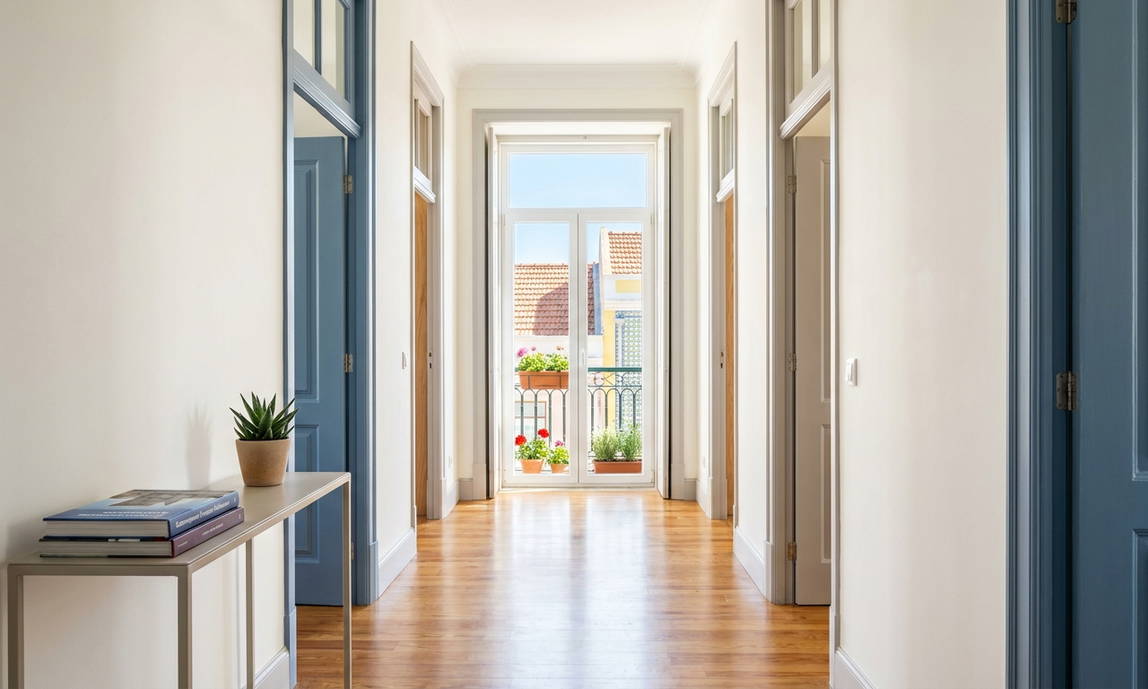
The year 2026 marks a real turning point for real estate in Portugal. If you are a host in Lisbon or Porto, you have undoubtedly followed the recent legislative changes surrounding tourist rentals with attention, and perhaps some anxiety. The golden age of Alojamento Local 2026 as we knew it is well and truly over in saturated urban areas. Faced with increasingly strict regulations and constant administrative pressure, many investors are looking for a secure exit strategy.
At Roomlala, we support hundreds of hosts daily in this transition. We are observing a clear and massive trend: the strategic shift toward long-term room rentals. Whether to accommodate students or young professionals, shared housing is establishing itself not only as the best alternative to tourist rentals in Portugal, but also as an economic model that is often more profitable and tax-optimized. Let's dive into the details of this shift together and discover why renting your rooms long-term is the smartest decision this year.
Read also: Housing crisis: Renting a room to an apprentice, the socially responsible solution for 2026 in French-speaking Switzerland, Shared housing in Wallonia 2026: Domiciliation and Cohabitant Status and LMNP reform and 2026 DPE regulations: Why homestays are becoming a haven for hosts
Alojamento Local 2026: The end of a tourist golden age in Lisbon and Porto?
To understand the current situation, it is crucial to clear up a common misunderstanding. Many hosts still think that the freeze on licenses is due to the famous Mais Habitação Portugal law. However, it is important to clarify that the national block imposed by this law was largely revoked by the new government at the end of 2024. The real challenge today no longer comes from the central state, but from the municipalities themselves.
In 2025 and 2026, cities like Lisbon and Porto took over by introducing their own Municipal Regulations for Alojamento Local (RMAL). These regulations created "absolute containment zones" in historic neighborhoods and city centers, effectively prohibiting the issuance of any new AL licenses. If you own property in these zones and do not yet have a license, short-term tourist rental is simply no longer a legal option.
Even for those who already have a license, the pressure remains immense. Granted, the extraordinary tax on Alojamento Local (CEAL) has been abolished, offering a small breath of fresh air. However, municipal oversight has drastically intensified. Strict quotas are maintained, and city halls no longer hesitate to simply cancel a license in the event of repeated neighborhood complaints about noise pollution. The risk of having one's tourist activity stopped overnight naturally pushes hosts to rethink their profitability strategy.
The long-term rental boom: Ultra-advantageous 2026 taxation
Faced with the restrictions weighing on tourism, the Portuguese government has implemented massive incentives to bring properties back to the residential market. The new 2026 tax package (Decreto-Lei n. 97/2026) radically changes the situation for hosts. At Roomlala, we believe this is the ideal time to review your operating model.
The moderate rent scheme: An unbeatable tax rate
The flagship measure of this new decree is undoubtedly the creation of the so-called "moderate" rent scheme. If you agree to cap the overall rent of your property at a maximum of 2,300 euros per month (which is more than enough for a large majority of apartments, even in shared housing), your income tax rate (IRS) drops dramatically.
Instead of being taxed at the standard rate of 25% on your rental income, you benefit from a fixed rate of only 10%. This 15-percentage-point tax reduction directly increases your net yield. It is an exceptional opportunity for hosts who want to stabilize their income without suffering the burden of standard taxation.
Let's take a concrete example: for an apartment generating 2,000 euros in monthly rental income, the tax savings achieved thanks to this 10% rate represent several thousand euros at the end of the year. This fiscal incentive largely compensates for, and even surpasses, the sometimes fluctuating and heavily taxed income of the old Airbnb rental model.
IRS reductions based on contract duration: A bonus for stability
If your property does not fall under the moderate rent criteria, or if you prefer a different approach, the government has also strengthened the benefits linked to the length of leases. The longer you commit to a long-term arrangement, the less tax you pay. This is the principle of the sliding scale reduction of IRS for classic long-term rental contracts.
Here is how these benefits are structured in 2026:
- Contracts of 5 to 10 years: The IRS rate is reduced to 15% (instead of 25%).
- Contracts of 10 to 20 years: The rate drops to 10%.
- Contracts of more than 20 years: The rate reaches an exceptional floor of 5%.
These long contracts offer absolute peace of mind. No more time-consuming management of check-ins, check-outs, and bi-weekly cleaning. You sign a lease, you enjoy lower taxes, and you guarantee the sustainability of your real estate investment.
Renting rooms as shared housing: The ultimate alternative to tourist rentals in Portugal
Now that the tax framework is set, how can you concretely maximize the profitability of your property? The answer is simple: shared housing. Rather than renting your empty apartment to a single family, renting each room individually as a furnished unit is the most effective alternative to tourist rentals in Portugal in 2026.
Firstly, room rentals (student housing or coliving for young professionals) completely escape tourist quotas and municipal containment zones. You do not need an AL license to rent a room for a duration of 6 months, 1 year, or more. You fall under residential rental regulations, perfectly compliant with municipal rules.
Secondly, the gross profitability of an apartment rented by the room is mechanically higher than that of a standard rental. A T3 apartment (three bedrooms) rented as an entire home might bring you 1,200 euros per month. By renting those same three rooms separately, furnished and equipped, at 500 euros each, you reach 1,500 euros, all while remaining under the 2,300-euro cap to benefit from the 10% IRS rate!
Finally, the risk of non-payment is diluted. If one of your flatmates decides to leave, you continue to receive rent from the other rooms while you look for a replacement. At Roomlala, we facilitate this search by connecting you with a community of reliable and verified tenants.
Practical cases: How to succeed in your transition with Roomlala in 2026
Moving from Alojamento Local to long-term shared housing can seem intimidating, but with the right strategy, the transition is smooth and extremely rewarding. Here are two use cases we frequently encounter at Roomlala.
Renting student rooms in Porto: A highly dynamic market
Porto is a top-tier university city. Every year, thousands of domestic and international students are desperately looking for housing. Renting student rooms in Porto has become a market with rock-solid stability.
Take the case of João, the owner of a T4 apartment in the Bonfim neighborhood. Faced with the inability to obtain an AL license in 2025, he decided to convert his property into student shared housing. He equipped each room with a desk, a good Wi-Fi connection, and comfortable bedding. By offering 10-month leases (the academic year), he ensures a 100% occupancy rate from September to June.
By publishing his listings on Roomlala, João was able to select serious students, often with strong guarantors. He benefits from reduced taxes, no longer has to worry about neighbor complaints regarding transient tourists, and takes advantage of his summers to do minor maintenance work.
Long-term rental Lisbon: Attracting young professionals and digital nomads
In Lisbon, the ideal target for shared housing is turning more toward young professionals, expats, and digital nomads who settle in for 1 to 3-year missions. Long-term rentals in Lisbon for this audience require a slightly higher quality standard: neat decor, convivial common spaces, and modern equipment.
Maria owned a beautiful apartment in Arroios, formerly operated as an AL. Tired of daily management and worried about the new regulations from the Lisbon City Hall, she transformed her property into a high-end coliving space. She now rents her rooms with 5-year contracts, allowing her to lower her tax rate to 15%.
Thanks to the Roomlala platform, Maria manages her rentals with total serenity. We help her showcase her property, secure bookings, and easily finalize contracts with her tenants. She has regained her peace of mind, all while maintaining a net yield equal to, or even higher than, her best years in tourist rentals.
In conclusion, the year 2026 does not signal the end of real estate investment in Portugal, quite the contrary. It marks the advent of a healthier, more sustainable model supported by highly incentivizing taxation. If you want to take the plunge and turn your regulatory constraints into financial opportunities, join the Roomlala community and start renting your rooms today!





There are no comments yet.
Leave a comment
You must be logged in to post a comment.