
 SEARCH
 LIST YOUR PROPERTY
In 2026, the rental investment landscape in France is navigating through unprecedented turbulence. Between an unrelenting energy renovation schedule and increasingly heavy taxation, landlords are desperately seeking solutions to make their assets profitable without breaking the bank. At Roomlala, we are observing a very clear underlying trend: faced with the growing constraints weighing on traditional furnished rentals, renting out a room within one's own primary residence is emerging as the new refuge for property owners. Why is this solution proving so attractive in 2026? How does it allow for bypassing current fiscal pitfalls while meeting extremely strong rental demand? This article breaks down a particularly advantageous legal and fiscal arrangement for you that could well transform your view of hosting.
Understanding the real estate storm: 2026 LMNP and the energy rating rental ban
The unyielding deadline of the energy calendar
Since January 1, 2025, the French real estate market has been facing the strict implementation of the Climate and Resilience Law schedule. The rental ban based on energy performance certificates (DPE) is now a tangible, daily reality for thousands of landlords. In concrete terms, properties rated G are formally excluded from the traditional rental market, whether for signing new leases or renewing existing contracts. This radical measure aims to eradicate energy-inefficient housing, but it leaves many owners in a financial dead end.
Read also: Porta 65 Jovem Program in 2026: How to finance your shared housing room in Portugal, Student lease vs. standard furnished lease: Which option should you choose to rent out your room for the 2026 school year? and 2026 student start of the school year in Brussels: Everything you need to know about the student lease and shared housing
The pressure is even greater as the next deadline approaches rapidly: properties rated F will face the exact same fate starting January 1, 2028. For an owner of an independent studio or an apartment intended for student rentals, upgrading to thermal standards often represents a financial abyss. Exterior insulation work, changing heating systems, or replacing windows require tens of thousands of euros in investment, with an increasingly uncertain return on investment.
It is in this anxiety-inducing context that renting out a portion of one's primary residence takes on its full meaning. However, at Roomlala, we want to be perfectly transparent with you: the ban on renting out energy-inefficient homes technically also applies to homestays rented as a primary residence. However, if your own house or main apartment is already properly insulated (rated A through E), leveraging a vacant room becomes a formidable alternative for generating income without having to acquire and renovate an external property.
The 2026 LMNP reform: an unprecedented fiscal shock
If energy constraints are frightening, it is above all the 2026 LMNP reform that has caused a veritable earthquake among investors. Historically, the non-professional furnished renter (LMNP) status under the actual tax regime was considered the holy grail of real estate. It allowed for the deduction of expenses and, above all, accounting depreciation of the property's value to completely wipe out tax on rental income for several decades, with no impact upon resale.
But the situation has changed drastically. The recent tax reform has heavily penalized traditional landlords by modifying the calculation of real estate capital gains. From now on, the accounting depreciation deducted during the rental period is added back into the capital gains calculation at resale. Let's take a concrete example: if you bought a studio for 100,000 euros, depreciated 30,000 euros over the years, and sell it for 120,000 euros, the taxable capital gain is no longer 20,000 euros, but 50,000 euros! The tax to pay explodes, destroying the overall profitability of the operation.
Faced with this fiscal burden on secondary residences and traditional rental investments, optimization becomes vital. This is precisely where renting out a furnished room in your home acts as a formidable fiscal shield, completely escaping this new capital gains trap.
Homestay: the true fiscal refuge in 2026
A miraculous rental tax exemption extended until the end of 2026
While traditional LMNP status suffers the wrath of the legislator, another mechanism shines with its stability and generosity: Article 35 bis of the General Tax Code (CGI). This legal text, a little-known gem of homestay taxation, allows owners to benefit from a total income tax exemption on the rent received. Good news for hosts: this measure has been officially extended until December 31, 2026.
The principle is simple but powerful. If you rent out one or more furnished rooms that are part of your primary residence, and you meet certain rental conditions, the income generated does not even need to be declared as your taxable rental or industrial/commercial income. It is absolutely tax-free. In a country where the tax burden is among the highest in the world, being able to generate 3,000, 4,000, or 5,000 euros per year without paying a single cent of additional tax is an exception.
At Roomlala, we assist thousands of owners every year who use this rental tax exemption to finance their children's studies, pay their condominium fees, or simply improve their purchasing power in the face of inflation. Unlike fiscal mazes that require an accountant, this mechanism stands out for its simplicity of application, provided that you strictly follow the rules of the game set by the administration.
Definitively escaping the real estate capital gains trap
As we have seen, the tragedy of the 2026 LMNP reform lies in the confiscatory taxation upon resale. By renting out a room in your home, you completely avoid this danger. Why? Because the property you are partially renting out remains legally and fiscally your primary residence. In France, the sale of a primary residence benefits from a total and unconditional exemption from capital gains tax.
Even if you have rented a room in your house for ten years to students or young professionals, the day you decide to sell your house, the tax authorities will still consider it your primary residence in its entirety. No depreciation will artificially inflate your capital gain, and no tax will be demanded on the capital gain realized.
It is this double protection (zero tax on rent collected today, and zero tax on capital gains at resale tomorrow) that makes the homestay the ultimate refuge for owners in 2026. It is a perfect defensive wealth strategy in the face of the legislative instability affecting traditional rental real estate.
Golden rules for mastering homestay taxation
Adhere strictly to rent caps or face penalties
To benefit from this tax haven, there is an unavoidable condition: you must charge a reasonable rent. For the year 2026, the tax authorities have set strict annual rent caps per square meter of living area (excluding utilities). These ceilings are re-evaluated each year and are set in 2026 at 215 euros per square meter in the Île-de-France region, and 159 euros per square meter in other regions.
Let's take a concrete use case to understand clearly. You live in Lyon (therefore outside Île-de-France) and you rent out a nice 15-square-meter room. The calculation is as follows: 15 m² multiplied by 159 euros, which gives a maximum annual rent of 2,385 euros excluding utilities. Broken down to the month, this means that your monthly rent excluding utilities must not exceed 198.75 euros. You can add reasonable fixed charges (water, electricity, internet), but the base rent must remain below this threshold.
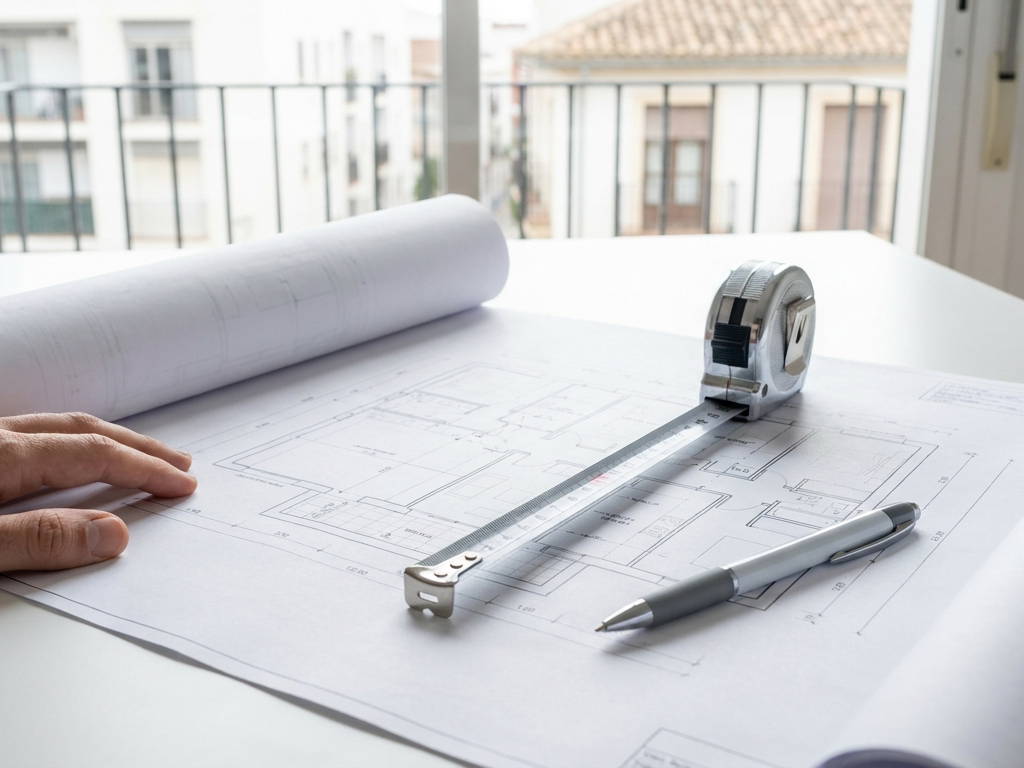
Attention, at Roomlala we insist heavily on this point of vigilance: compliance with this ceiling is binary. If you exceed the ceiling, even by a single euro for the year, your entire rental income from the first euro received becomes taxable under the micro-BIC or actual regime. There is no tolerance. It is therefore crucial to accurately measure the private surface area of the room (without counting the shared common areas) and adjust your rent accordingly.
Strict integration into the owner's primary residence
The second essential condition to take advantage of the exemption concerns the configuration of the premises. The room you rent must necessarily be an integral part of your primary residence. This means that it must not constitute an independent dwelling. The tax administration is very meticulous on this criterion to avoid abuse.
In concrete terms, how does this translate?
- The room must not have a separate entrance leading directly to the outside. The tenant must go through the main entrance of your home.
- There must be no independent water or electricity meters for the room.
- The tenant must share certain living areas with you, generally the kitchen and bathroom, even if the room has its own private sanitary facilities.
If you have converted an outbuilding at the bottom of your garden, a basement studio with its own outside access, or completely independent attic space, the tax authorities will reclassify this property as a separate dwelling. In that case, you will automatically fall under the scope of traditional LMNP taxation, with all the constraints of the 2026 LMNP reform mentioned above. Therefore, always keep in mind the spirit of the law: it is about shared accommodation under the same roof.
A virtuous model: from intergenerational co-living to student housing
Meeting a societal urgency while securing your income
Beyond the purely financial and fiscal aspect, renting out a room in your home is an approach that makes sense. In 2026, the student housing crisis has never been more severe. CROUS facilities are saturated, and small private spaces are overpriced or have disappeared from the market due to the energy rating rental ban. By opening your door, you are actively participating in the resolution of this societal crisis.
The law requires that the rented room constitutes the tenant's primary residence, or their temporary residence if they can justify seasonal worker status. These criteria perfectly match the profile of students, apprentices, young professionals in their probationary period, or seasonal workers in tourism and agriculture. These profiles are looking for flexible, furnished, and affordable solutions.
Furthermore, we are seeing an explosion in demand for intergenerational co-living. Many seniors with large, under-occupied houses find in this model a solution to break isolation, ensure a reassuring presence in the evening, and benefit from tax-free retirement income. It is a win-win exchange where the human element takes its place back at the center of the real estate transaction.
Rent with complete peace of mind with Roomlala
Starting out in homestay rentals can raise legitimate questions. Will I get along with my tenant? How do I secure rent payments? How do I draft a lease that complies with tax requirements to guarantee my exemption? This is where Roomlala's expertise makes all the difference.
We have designed our platform to offer you an ultra-secure legal and operational framework. Our tools allow you to automatically generate rental contracts (student lease, mobility lease) that are perfectly up to date with the latest 2026 regulations. You can communicate with candidates in advance, verify their profiles, and ensure that their expectations match your lifestyle.
In conclusion, faced with a traditional real estate market stifled by the 2026 LMNP reform and the obligations of the DPE, homestay renting is no longer a simple marginal trend. It has become the rational, profitable, and humane choice par excellence. By respecting the ceilings set by the state and getting support from a trusted platform like Roomlala, you turn a legislative constraint into a real wealth opportunity.

There are no comments yet.
Leave a comment
You must be logged in to post a comment.