
 SEARCH
 LIST YOUR PROPERTY
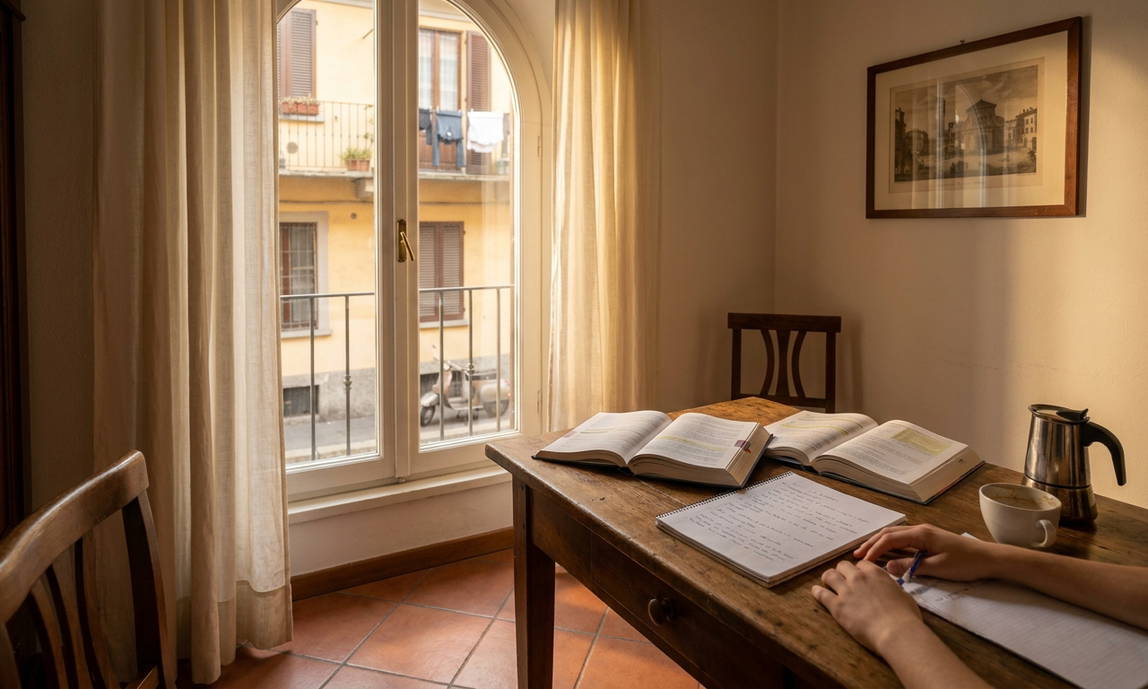
A 2026 academic year marked by student hardship in Italy
The 2026-2027 academic year is once again shaping up to be high-pressure on the other side of the Alps. For thousands of young Italians and international students, the dream of studying at the peninsula's prestigious universities is hitting an increasingly impassable financial wall. At the heart of this storm is caro affitti 2026, a phrase now infamous in Italy for describing the uncontrollable surge in rent prices.
At Roomlala, we carefully observe European rental market dynamics every year to better support our community. In Italy, the situation has reached a tipping point. Students known as fuorisede (those studying far from their family home) are the primary victims of this systemic crisis. Faced with family budgets squeezed by global inflation, finding a place to live has become a real uphill battle.
Read also: Student housing crisis: Homestay as a solution to Italy's 2026 rent spike and Ontario Rent Increase 2026: Why Renting Out a Room Appeals to Hosts
However, faced with this adversity, new forms of solidarity are emerging. As traditional renting becomes a luxury, students are turning en masse toward more human and economical alternatives. In this article, we break down the mechanics of this student housing crisis in Italy and explain why homestay is currently emerging as the most sustainable and caring solution to address it.
Caro Affitti 2026: An autopsy of the student housing crisis in Italy
To understand the scale of the phenomenon, it is crucial to look beyond national averages. While some statistics show an overall drop in student rents of around 6.2% in 2026 nationwide, this figure masks an extremely contrasted geographic reality. Small university towns are seeing prices stagnate or decrease, but major academic hubs continue to see prices soar, worsening the university housing crisis.
Milan and Rome: The epicenter of unaffordable rents
Unsurprisingly, Milan retains its unenviable title as the most expensive city in Italy for students. For the 2026 academic year, the average rent for a single room there is approximately 704 euros per month. A prohibitive rate that effectively excludes a large portion of students from middle-class backgrounds, forcing them either to move drastically away from the city centre or to give up on their studies in the Lombard capital.
The situation is hardly better in the capital. In Rome, room prices have seen an alarming increase of 7% in just one year. The average now sits at 615 euros per month. Even worse, property listings sometimes border on the indecent: near the famous La Sapienza University, it is not rare to see offers exceeding 1,200 euros for a simple room. These stratospheric prices transform the search for shared housing in Rome into a real nightmare for families.
These increases are not mere statistical anomalies; they reflect a total disconnect between traditional housing supply and the actual financial capacities of students and their parents. The classic rental market in these metropolises has become a hostile environment for young people.
The pressure of tourist rentals on the traditional supply
How did we get here? One of the major aggravating factors of this crisis is the uncontrolled proliferation of short-term tourist rentals. In cities with exceptional cultural heritage like Rome, Milan, or Florence, landlords overwhelmingly prefer to rent their apartments to passing tourists rather than to students for the year.
This phenomenon is literally drying up the supply of long-term housing. Apartments once intended for student shared housing are being transformed into tourist rentals, which are more profitable and perceived as less risky by landlords. This scarcity of supply, combined with a student demand that remains very strong, creates upward pressure on the prices of the few properties still available on the traditional market.
Faced with this bitter realization, it is becoming obvious that the traditional model of student renting is running out of steam in Italian metropolises. It is urgent to rethink how we house our youth, by valuing already existing spaces rather than desperately seeking studios that no longer exist.
University residences and PNRR: From promises to the reality of the academic year
Aware of the social urgency, the Italian government has tried to provide responses, notably through the National Recovery and Resilience Plan (PNRR). On paper, the announcements were ambitious: the creation of more than 63,200 new beds for students by 2027. A theoretical breath of fresh air highly anticipated by student associations.
However, the reality on the ground for the 2026-2027 academic year is quite different. Of the 63,200 promised beds, only 33,000 are actually available and operational this year. This gap between political announcements and effective deliveries leaves tens of thousands of students out in the cold, forced to turn to an already saturated private market.
But the most thorny problem lies not only in the number of beds; it lies in the pricing. Student unions, such as the UDU (Unione degli Universitari), have stepped up to denounce rates deemed totally inaccessible even within these new structures. Indeed, many residences funded by the PNRR are managed by private operators who apply rents that can reach 850 euros per month for a single room.
This absurd situation empties the initiative of its social substance. How can it be justified that student housing in Milan or Rome, supposedly subsidized to help young people, costs more than the minimum wage of many part-time workers? University residences, intended to be students' shield against real estate speculation, are ultimately contributing, despite themselves, to the general inflation of prices.
Homestay: The solidarity alternative to inflation
It is in this context of deep crisis that renting a homestay makes perfect sense. At Roomlala, we are convinced that the solution to caro affitti 2026 will not come solely from building new, overpriced buildings, but from optimizing the existing housing stock, driven by values of mutual aid and solidarity.
An economic springboard for student housing in Milan and elsewhere
The first advantage, and not the least, of a homestay is its financial accessibility. By renting an unoccupied room within their primary residence, the host does not have the same profitability requirements as a real estate investor. The prices offered are therefore structurally lower, often 20 to 40% cheaper compared to the traditional rental market or private residences.
Let's take a concrete example: Luca, a student from Puglia, has just been accepted to the Polytechnic University of Milan. Faced with studios at over 900 euros and shared housing at 700 euros, his budget doesn't cut it. By opting for a homestay via Roomlala, he finds comfortable housing with a couple in their fifties for 450 euros per month, all utilities included. Not only does he save nearly 300 euros per month, but he also avoids exorbitant agency fees and the tedious process of setting up water or electricity accounts.
This solution helps democratize access to higher education. Finding student housing in Milan should no longer be a privilege reserved for the wealthiest families, but a right accessible to all thanks to space-sharing.
More than just shared housing in Rome, a real intergenerational mutual aid
Beyond the purely financial aspect, renting a student room in Italy in a homestay offers an invaluable human dimension. In a society where isolation affects all generations, living together helps recreate social ties. This is particularly true in large cities where anonymity weighs heavily on new arrivals.
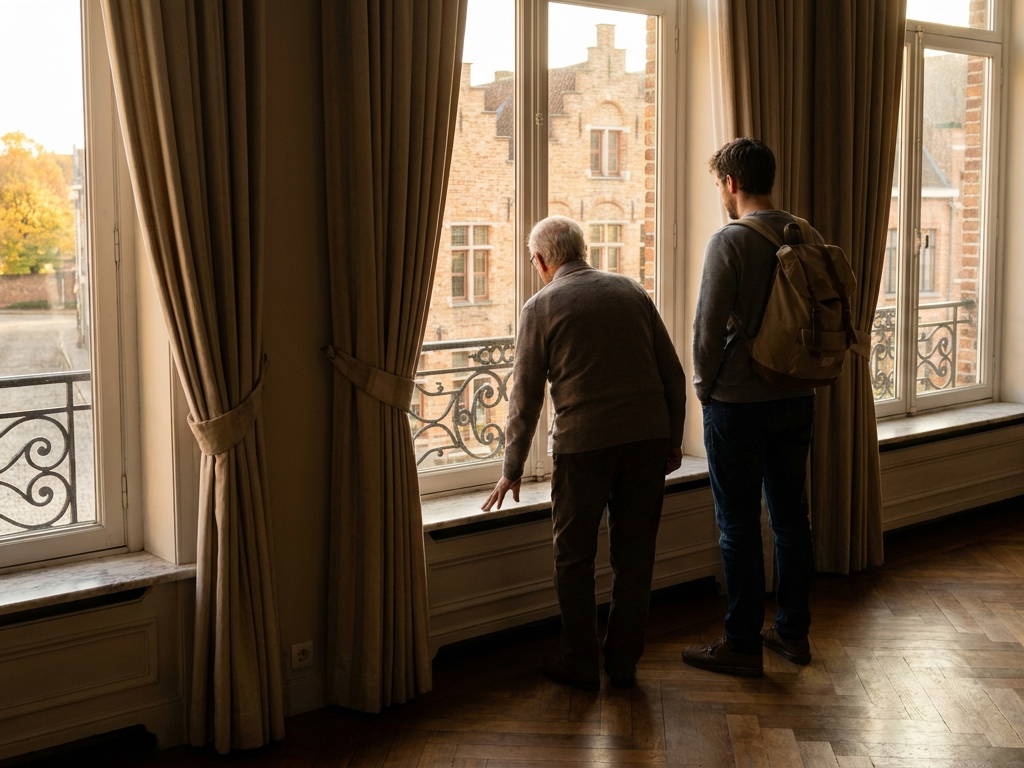
Let's imagine the case of Maria, a Roman retiree living alone in a large apartment in the San Lorenzo district, not far from La Sapienza. Her children have long since left the nest, and her pension is struggling to cover the rising cost of living. By welcoming Sofia, a first-year student, Maria secures a significant supplementary income. But above all, she finds a reassuring and dynamic presence in her daily life. Sofia, for her part, benefits from a calm environment to study, the precious advice of a local to navigate the city, and a living environment much warmer than an impersonal room.
At Roomlala, we see these beautiful stories come to life every day. A homestay is not just a simple real estate transaction; it is a moral contract of mutual aid, an exchange of favors that restores meaning to the notion of neighborhood and community.
How Roomlala supports you in this transition in Italy
We know that taking the step of renting a homestay can raise questions, both from hosts and tenants. That is why Roomlala has set up a secure and transparent ecosystem, designed to accompany you at every stage of your project in Italy.
- Profile verification: We place capital importance on trust. All profiles, whether hosts or tenants, are verified by our teams to ensure serene exchanges.
- Secure online payment: The first month's rent is paid via our secure platform. The money is only transferred to the host 48 hours after the student's arrival, which eliminates any risk of scams, a plague unfortunately common on unmoderated classifieds groups.
- Insurance and assistance: By using Roomlala, you benefit from guarantees adapted to protect both the host's property and the tenant's peace of mind.
From a legal point of view, Italy offers contracts perfectly adapted to this situation, such as the contratto di locazione per studenti universitari (rental contract for university students). This type of transitional contract, with a duration ranging from 6 to 36 months, is ideal for renting a room. It offers interesting tax advantages for the owner (notably via the cedolare secca) while protecting the student's rights.
In conclusion, faced with the brutality of caro affitti 2026, it is time to change the paradigm. Do not let skyrocketing prices dictate your academic future or strain your family budget. Whether you are a student looking for a cozy place to succeed in your year, or a homeowner with a free room eager to lend a hand to the youth while making some extra money, the solution is just a click away. Join the Roomlala community and take part, too, in a new way of living and sharing space in Italy.



There are no comments yet.
Leave a comment
You must be logged in to post a comment.