
 SEARCH
 LIST YOUR PROPERTY
In this September 2026, Italy is experiencing a period of significant political and economic activity. As the government finalizes the details of the 2027 Italy Budget Law, many hosts are asking legitimate questions about the future of their real estate investments. If you have a vacant room and are considering renting it out, or if you are already an active host, these new tax measures concern you directly. Facing a housing crisis that is particularly affecting large university cities, public authorities are attempting to find a balance between tax incentives for landlords and financial support for tenants. At Roomlala, we are following these legislative developments very closely to provide you with the best possible support. In this comprehensive article, we will together decipher the working hypotheses of this new finance law, analyze the planned adjustments for the famous cedolare secca, and provide you with all the keys to optimize your Italy host taxation while renting with complete peace of mind.
An update on the 2027 Italy Budget Law and the real estate market
A context of student and young professional housing crisis
For several years, Italy has faced unprecedented housing pressure, particularly in major cities such as Milan, Rome, Bologna, or Florence. So-called fuorisede students (who study far from their family home) and young professionals struggle to find affordable accommodation. It is within this tense context that discussions surrounding the 2027 Italy Budget Law are taking place. The government clearly understands that to ease the market, it is essential to encourage hosts to open their doors and offer long-term leases, rather than leaving their properties vacant or focusing exclusively on short-term tourist rentals.
Read also: Transitional lease in Italy: Essential rules for renting a room in 2026, Tax deduction for 'fuorisede' students: Lowering the cost of your room in Italy in 2026 and Start of the 2026 academic year in Italy: The advantages of Canone Concordato for renting out your room
At Roomlala, we observe this strong demand daily. Every day, thousands of young people look for an Italy room for rent to continue their studies or start their careers. The 2027 finance law, currently being drafted and subject to budget approval this autumn, specifically aims to target tax relief to boost this sector. This is a major societal issue: housing the youth while guaranteeing fair and secure profitability for hosts who choose to participate in residential renting.
Let's take a concrete example: if you own a large apartment in Turin and your children have left the family nest, renting one or two rooms to students is not only a significant source of extra income, but also a gesture of social support. The measures discussed for 2027 seek to sustain this model by offering a clear and advantageous tax framework, thereby preventing tax pressure from discouraging private initiatives.
The government's main priorities for autumn 2026
At present, the text of the 2027 Italy Budget Law is not yet definitive. The information we have, from reliable sources such as Il Sole 24 Ore or the Agenzia delle Entrate, consists of serious working hypotheses. The common thread of this budgetary maneuver is the fight against property vacancy and the revitalization of city centers. Discussions are focusing on targeted measures, as state financial resources require precise strategic choices.
One of the major directions is to maintain current gains for the residential sector while innovating on other fronts. For example, the government wishes to stimulate the overall rental supply by also addressing empty commercial premises, while proposing unprecedented incentives for real estate professionals who commit to housing young people. For you, as a private host, the main goal of this law will be to stabilize your current tax benefits, while potentially simplifying reporting procedures.
We advise you to stay alert for announcements in autumn 2026. Although the broad outlines are defined, exact percentages and eligibility conditions may still be subject to amendments in Parliament. However, the trend is clear: Italy host taxation is moving toward rationalization to reward those who contribute to solving the student and active professional housing crisis.
2027 cedolare secca: What changes (and what stays the same) for renting a room in Italy
Maintaining the 10% cedolare secca for students
This is the question on all our hosts' lips: what is happening with the 2027 cedolare secca? As a reminder, the cedolare secca is an optional flat tax that replaces the IRPEF (personal income tax) as well as registration and stamp duties on rental contracts. This system helps avoid double taxation and benefits from a fixed rate, independent of your other income. The good news from current discussions is that for student housing, the focus is on maintaining this exceptional tax benefit.
Indeed, if you rent a room to a student in a university city (or a neighboring municipality) with a rent-controlled contract (canone concordato), you can continue to benefit from a reduced rate of 10%. This is an absolute boon for Italy room for rent. The government is aware that removing this benefit would cause an immediate rise in rents, which would run counter to its objectives. This 10% rate is a powerful lever to convince hosts to rent at reasonable prices.
Imagine the case of Maria, a host in Bologna. She rents a room to an engineering student for 400 euros per month. By opting for the standard IRPEF regime, her rental income would be added to her salary, pushing her into a high tax bracket (potentially 35% or more). Thanks to the 10% cedolare secca, she only pays 40 euros of tax per month on this rent, without any unpleasant surprises at the end of the year. At Roomlala, we strongly encourage you to check with your municipality to establish these specific contracts and maximize your income.
Extending the flat tax to commercial premises (21%)
While stability is the order of the day for student rooms, the real novelty discussed for the 2027 cedolare secca concerns the commercial sector. The draft law plans to extend this flat tax to store and office rentals, with a rate set at 21%. The stated goal is to fight against the proliferation of empty storefronts in Italian city centers, a phenomenon that degrades the local economic and social fabric.
Although this measure does not directly affect Italy shared housing or renting rooms in a home, it is very informative about the government's tax philosophy. By applying the cedolare secca to businesses, the State confirms the effectiveness of this tool in stimulating the real estate market. This reinforces the legitimacy of the entire system and secures its long-term existence for the residential sector.
For a diversified investor, this novelty is crucial. If you own both an apartment that you rent by the room via Roomlala (benefiting from the 10%) and a small commercial space on the ground floor, the 2027 finance law could significantly lighten your overall mental and tax burden. Managing your assets will be simplified, with a clear and predictable tax system for all your properties.
Italy host taxation: New incentives and reduced VAT
The proposal for a 5% VAT for professionals
Another flagship measure debated in the context of the 2027 Italy Budget Law specifically concerns housing for young professionals and students (under 35/36 years old). Facing the scale of demand, the government is considering introducing a reduced 5% VAT on rentals managed by real estate or construction companies. Currently, these operations are often subject to standard VAT rates or are exempt without the right to deduction, which slows down the construction of private student residences.
This proposal aims to encourage developers to invest massively in coliving and residences for young professionals. By reducing VAT, the State hopes to lower the final cost of these homes. But what does this mean for you, as a private host? At Roomlala, we analyze this measure not as a threat, but as a healthy structuring of the market. Professional supply will increase, but it will often target an audience ready to pay for additional services (gyms, integrated coworking spaces).
Your offer of Italy room for rent in a homestay will always retain its major advantage: authenticity, human warmth, and an overall more accessible cost. Furthermore, competition from these new professional players highlights the importance of maintaining strong tax benefits for individuals (like the cedolare secca), so as not to unbalance the market to the detriment of small hosts who form the historical foundation of student housing in Italy.
Optimizing rental income as an individual
As an individual, Italy host taxation offers numerous optimization opportunities, provided you are well-informed. In addition to the crucial choice of the tax regime (classic IRPEF or cedolare secca), it is important to take into account other local taxes, such as the IMU (Imposta Municipale Unica). Did you know that in many municipalities, renting your property with a rent-controlled contract (canone concordato) entitles you to a 25% reduction on the IMU?
To optimize your income with Roomlala, we recommend planning your rental strategy. For example, if you rent a room for periods of 10 to 12 months to students, you ensure financial stability while benefiting from the best tax rates. It is essential to always draw up a proper contract and register it with the Agenzia delle Entrate. This process, often perceived as tedious, is actually your best legal protection and the key to unlocking all your tax benefits.
Let's take the case of Roberto, who rents two rooms in his Roman apartment. By scrupulously registering his Italy shared housing contracts and opting for the cedolare secca, he has protected himself from tax reassessments while maximizing his net yield. Furthermore, a registered contract is essential for your tenants to, on their side, benefit from financial aid, which makes your rooms much more attractive on the market.
Italy shared housing and benefits for tenants: The Bonus Affitto
Tax deductions for those under 36
A successful rental relies on a balance between a host satisfied with their profitability and a tenant who manages to cover their rent. The 2027 Italy Budget Law does not only look at Italy host taxation; it also confirms support mechanisms for young people. Young tenants and off-site students (fuorisede) continue to benefit from significant tax deductions, often grouped under the name Bonus affitto.
These deductions, subject to income ceilings, allow young people under 36 to deduct a portion of their rent from their own taxes (or those of their parents if they are still attached to their tax household). For a student, this assistance can represent several hundred euros in savings per year. This is a strong argument when you offer a room on Roomlala: by providing a legal and registered contract, you indirectly offer additional purchasing power to your tenant.
Take the example of Giulia, 22, who is leaving Puglia to study in Milan. Her budget is tight. By choosing a room with a host who agrees to sign a regular canone concordato contract, she ensures a moderate rent and the possibility of benefiting from the Bonus affitto. For their part, the host secures a solvent and serious tenant, while taking advantage of the 10% 2027 cedolare secca. It is a true win-win partnership that successive finance laws attempt to consolidate.
How Roomlala secures your rental contracts
Faced with the complexity of tax laws and the announcements of the 2027 Italy Budget Law, it is normal to feel some apprehension. That is where Roomlala comes in. Our platform is not just a matching tool; it is a trusted third party designed to secure each step of your Italy shared housing or homestay project.
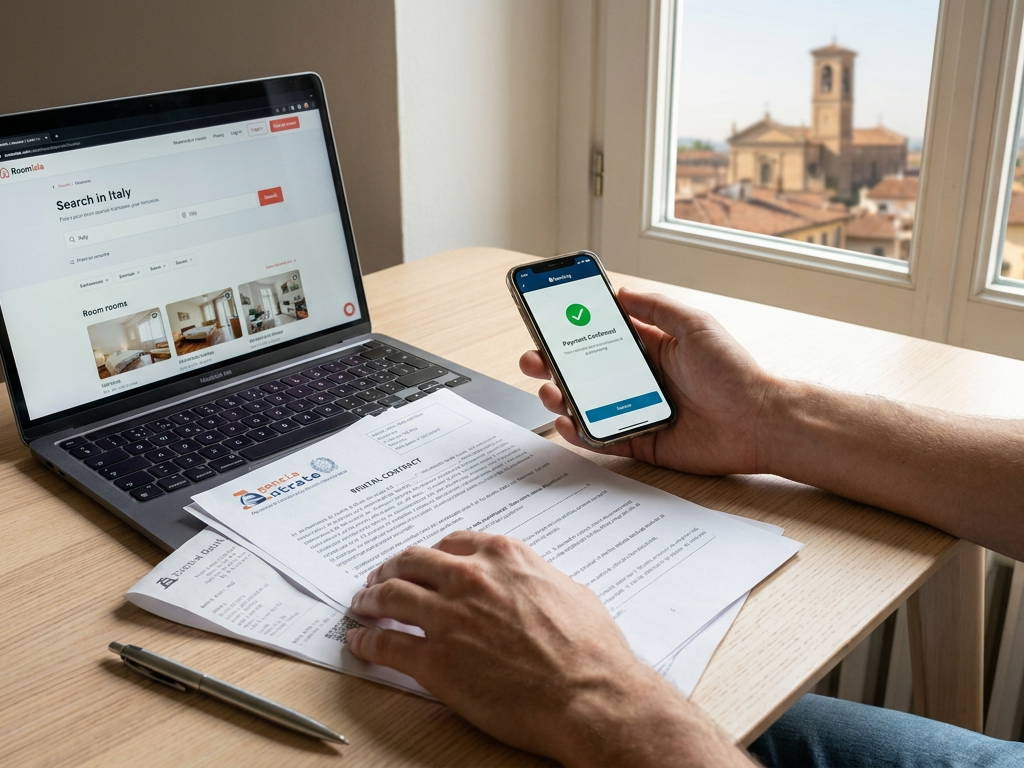
At Roomlala, we provide a secure framework. From the online booking stage, payments are protected. We strongly encourage you to formalize the rental with a written contract, a necessary step to be in compliance with the Agenzia delle Entrate. Although we do not provide personalized tax advice (as each financial situation is unique), our platform allows you to generate receipts and keep a clear trace of all your transactions, thus greatly facilitating your annual tax return.
In conclusion, the discussions surrounding the 2027 budget show a clear willingness by the Italian State to support the rental market. By keeping informed and using secure platforms like Roomlala, you have all the cards in hand to transform this period of legislative change into a sustainable and profitable opportunity. Don't wait any longer to make the most of your free space and welcome the world into your home, while taking advantage of the best possible tax conditions!




There are no comments yet.
Leave a comment
You must be logged in to post a comment.