
 SEARCH
 LIST YOUR PROPERTY
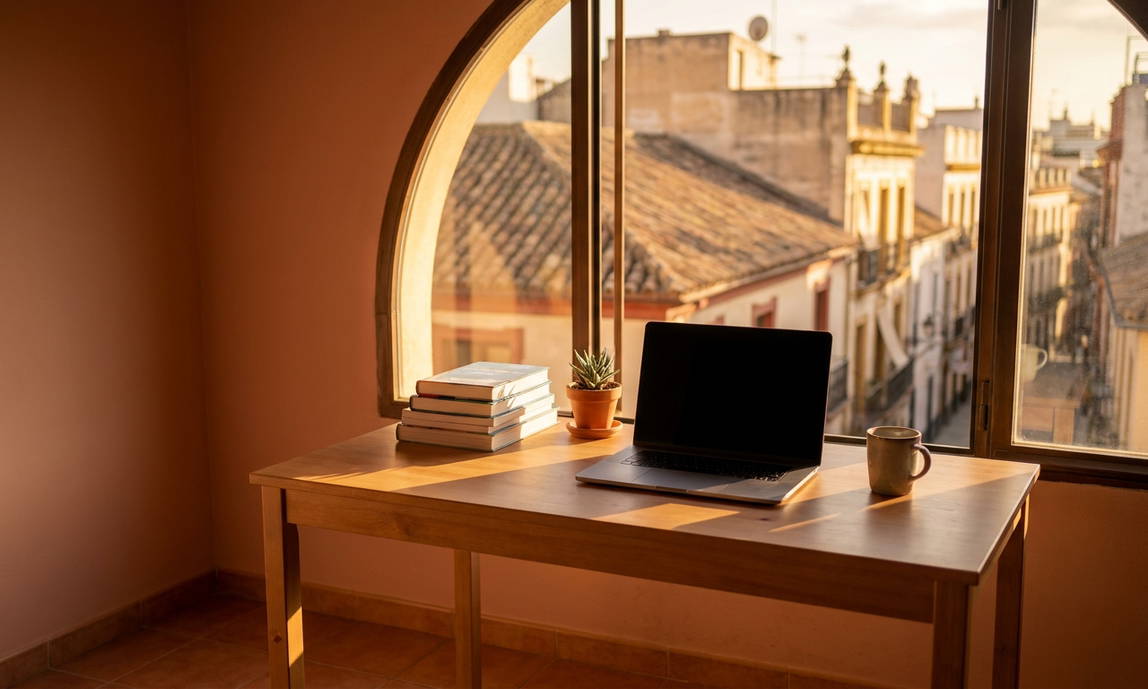
The 2026 student housing season in Spain is shaping up to be one of the most challenging in recent years for thousands of young people and their families. With real estate inflation showing no signs of slowing down, finding a place to stay in major Spanish cities has become an uphill battle. At Roomlala, we see the challenges students face every day, torn between tight budgets and an increasingly scarce supply of traditional housing. However, at the heart of this crisis, one solution stands out for its flexibility, accessibility, and legal security: the homestay. Here is an analysis of a phenomenon that is reshaping the Spanish student housing landscape.
An unprecedented student housing crisis in 2026
Alarming numbers in major cities
The shortage of housing for students in Spain is no longer just a trend; it is a deeply rooted structural crisis. For the 2026 academic year, the statistics are clear: the country has approximately 523,000 displaced students—young people who leave their hometowns to pursue their studies. Faced with this massive demand, institutional supply is woefully insufficient, with only 132,000 spots available in university residences across the country. This blatant imbalance inevitably pushes students toward the private rental market, a sector already under high pressure.
Read also: Fall 2026: How the 2026 Spanish Housing Law is transforming the student housing search, Student housing in Flanders: What you need to know about the student lease for the 2026 school year and Start of the 2026 academic year in Italy: The advantages of Canone Concordato for renting out your room
The direct consequence of this imbalance is a historic price surge. Finding student housing in Madrid has become a luxury for many, with the average rent for a room reaching a staggering 617 euros per month, a 12% increase from the previous year. The situation is hardly better in Catalonia, where shared housing in Barcelona now averages around 600 euros. Even historically affordable cities are being affected: the search for student housing in Valencia is met with an average rent of 437 euros, and the rare offers under 400 euros are snapped up within the first days of summer. At Roomlala, we see that this financial pressure is excluding many young people from traditional rental channels.
This rampant inflation is radically changing students' search criteria. Gone are the days when one could hope to rent a small studio apartment near campus for a reasonable price. Today, shared housing and homestays are no longer just lifestyle choices—they are economic necessities. The housing crisis in Spain is forcing families to completely rethink their study budgets, sometimes sacrificing other expenses to ensure decent accommodation for their children.
The unexpected competition from young professionals
Adding to the supply shortage is fierce and relatively new competition in the room rental market. Students are no longer the only ones looking for this type of accommodation. Faced with the inability to buy property due to high interest rates and strict bank requirements, or to rent an entire apartment due to exorbitant rents, more and more young professionals are turning to room rentals. In 2026, the average age of people renting a room in Spain climbed to 33.
This demographic shift is changing market dynamics. Faced with the choice between a student whose income often depends on parents and a working professional, landlords sometimes tend to favor the perceived financial stability of the professional. This creates an additional barrier for students aged 18 to 25, who are often passed over for older applicants. This is a brutal reality of the 2026 student housing season in Spain: the competition is no longer just in university classrooms, but also during apartment viewings.
Let’s take a concrete example: Lucas, a 20-year-old engineering student in Madrid, faced over fifteen rejections for traditional shared housing, as existing tenants preferred to bring in a 30-year-old working professional. It was only by turning to the Roomlala platform that he was able to find a homestay. Host landlords, often retirees or families with a spare room, are specifically looking for the student profile, appreciating their academic schedule and their need for a quiet environment to study.
Why the homestay is the ideal alternative
Affordable rates despite soaring rents
In this context of an overheated real estate market, the homestay stands out as the ultimate fallback solution. The primary argument remains, undeniably, the price. By renting a room from a private individual via Roomlala, students can make substantial savings, often between 20 and 30% compared to the traditional shared housing market or private residences. Hosts, not having the same profitability constraints as a classic real estate investor, generally offer fairer and more stable rates.
Furthermore, the homestay model almost always includes utilities in the rent. Water, electricity, heating, and especially high-speed internet are essential elements for a student, and their costs have also exploded in recent years. By opting for this formula, students and their families have perfect control over their monthly budget, without the fear of surprise utility adjustments at the end of winter. It is invaluable peace of mind for starting an academic year with confidence.
Take the case of Maria, a scholarship student from Andalusia who needed to find student housing in Valencia. With a maximum budget of 350 euros including utilities, the traditional market was closed to her. Via Roomlala, she found a comfortable room with Carmen, a 68-year-old retiree, for 320 euros all-inclusive. This affordable rate allowed Maria to continue her studies without going into debt, while benefiting from a healthy living environment conducive to academic success.
A human and reassuring experience
Beyond the purely financial aspect, the homestay offers a human dimension that other types of housing cannot match. For many young people, the 2026 student housing season marks the first time they have left the family nest. Arriving in a large, unfamiliar city, often far from their usual support system, can be a major source of anxiety. Being welcomed by a local who knows their neighbourhood, transport options, and local tips perfectly, greatly facilitates integration.
At Roomlala, we collect many testimonials highlighting this intergenerational solidarity. The host often becomes a reassuring figure, an anchor point. It is not about replacing parents, but about offering a supportive presence. For international students or those from other regions, it is also the perfect opportunity to practice the language daily and immerse themselves in the local culture, far from the sometimes cold anonymity of large student residences.
For landlords, hosting a student often meets a need for company or a desire to feel useful, while generating a welcome supplementary income. It is a win-win exchange. Shared living rules are established from the start, ensuring respect for privacy and each person's rhythm. This structured and chosen cohabitation contrasts sharply with forced shared housing, where conflicts over cleaning or noise are commonplace.
The legal framework: Flexibility of the Civil Code vs rigidity of the LAU
How does room rental work in Spain?
One of the major assets of a homestay in Spain lies in its specific legal framework. Unlike renting an entire apartment, which is strictly governed by the highly protective Urban Leases Act (Ley de Arrendamientos Urbanos - LAU), renting a single room falls under the Spanish Civil Code. More specifically, it relies on the principle of freedom of contract defined by Articles 1255 and 1543 of the Civil Code. This legal nuance changes everything for both landlords and tenants.
The LAU, in its desire to protect long-term tenants, imposes strong constraints on landlords, notably mandatory contract renewals of up to 5 years, and strict control over rent increases. Faced with these rigidities, many Spanish landlords have withdrawn their properties from the traditional rental market, thereby worsening the housing crisis in Spain. In contrast, the Civil Code considers that renting a room (which does not constitute a complete and independent dwelling with its own exclusive bathroom and kitchen facilities) allows both parties to freely set the terms of their agreement.
This contractual freedom means that the duration of the lease, the rent amount, notice periods, and rules for using common areas are defined by mutual agreement. At Roomlala, we encourage our users to formalize these elements in a clear and detailed written contract. This flexibility is precisely what encourages many individuals to open their doors to students: they retain control over their homes while providing a service.
The benefits for landlords and tenants
For a landlord, the flexibility of the Civil Code is a decisive factor. Renting a room to a student allows them to commit to a specific period, aligned with the academic year (generally from September to June). At the end of this period, the landlord regains full use of their property for the summer, without having to deal with the automatic 5-year renewals imposed by the LAU. If they wish to host family during the summer months or carry out renovations, they are free to do so.
It is this lighter legal framework that helps maintain affordable prices. Knowing they are not locked into a long-term contract, hosts are much more inclined to offer reasonable rents. For example, Carlos, who owns a large apartment in Madrid, refused to rent out his entire property under the LAU for fear of non-payment and the complexity of eviction procedures. Upon learning that renting one of his rooms under the Civil Code regime offered this flexibility, he listed his property on Roomlala, thus offering a student housing solution in Madrid at a very competitive rate.
For the student tenant, this flexibility is equally advantageous. They do not have to commit to durations that are incompatible with their curriculum. If they leave for an internship abroad in the second semester, the contract can be written to cover only the period of their actual presence. Moreover, the requirements in terms of financial guarantees and deposits are generally much less burdensome than those requested by real estate agencies under the LAU regime, thus facilitating access to housing for young people.
New 2026 regulations: How to stay legal?
Avoiding reclassification as a permanent residence
While renting a room under the Civil Code offers tremendous flexibility, it is not exempt from rules, and 2026 marked a turning point in Spanish case law. Faced with certain abuses by landlords trying to bypass the LAU by renting entire apartments as multiple room contracts, judges and the government have taken a firmer stance. The main point of caution lies in the notion of 'habitual residence'.
Recent court rulings have clearly established that if a room is rented without justification of a precise temporary nature, and it effectively becomes the tenant's permanent and habitual residence, a judge can reclassify the contract and impose the application of the LAU, with all its constraints (notably the 5-year lease). To avoid this risk, it is imperative that the contract explicitly states the temporary nature of the rental. In the case of students, the reason is obvious: the contract duration must be linked to the duration of the academic year or the training course in progress.
To be perfectly compliant, the landlord must request and attach to the contract documents proving the temporary nature of the stay. This could be a school enrollment certificate, an internship agreement, or a university acceptance letter. At Roomlala, we constantly remind our hosts that transparency is key. By clearly justifying that the student housing in Madrid or shared housing in Barcelona is not intended to be the young person's permanent residence, the contract is fully secured under the Civil Code.
Best practices with Roomlala
Given the stricter regulations regarding temporary contracts (alquiler de temporada) in 2026, support from a trusted platform is more crucial than ever. Roomlala provides its users with up-to-date contract templates, specifically drafted to meet current Spanish legal requirements. These documents automatically include temporary clauses and the reasons justifying the application of the Civil Code, thus protecting both parties.
We also recommend establishing a detailed inventory check upon move-in and move-out, as well as clear house rules (normas de convivencia). This last point is essential to ensure harmony in daily life: schedules, use of the kitchen, guest policy, etc. By formalizing these aspects, you eliminate gray areas that could be sources of conflict. The goal is to create a healthy and secure environment where the student can focus on their studies and the host can enjoy this human experience with complete peace of mind.
In conclusion, the 2026 student housing season in Spain is undeniably marked by a severe housing crisis. But far from the bidding wars of the traditional rental market, the homestay stands out as a powerful alternative. Governed by a flexible Civil Code that still requires transparency, it allows for reconciling the economic imperatives of students with the need for flexibility among landlords. By choosing Roomlala, you opt for a legal, human, and supportive solution—a true breath of fresh air in a bubbling real estate market.


There are no comments yet.
Leave a comment
You must be logged in to post a comment.