
 SEARCH
 LIST YOUR PROPERTY
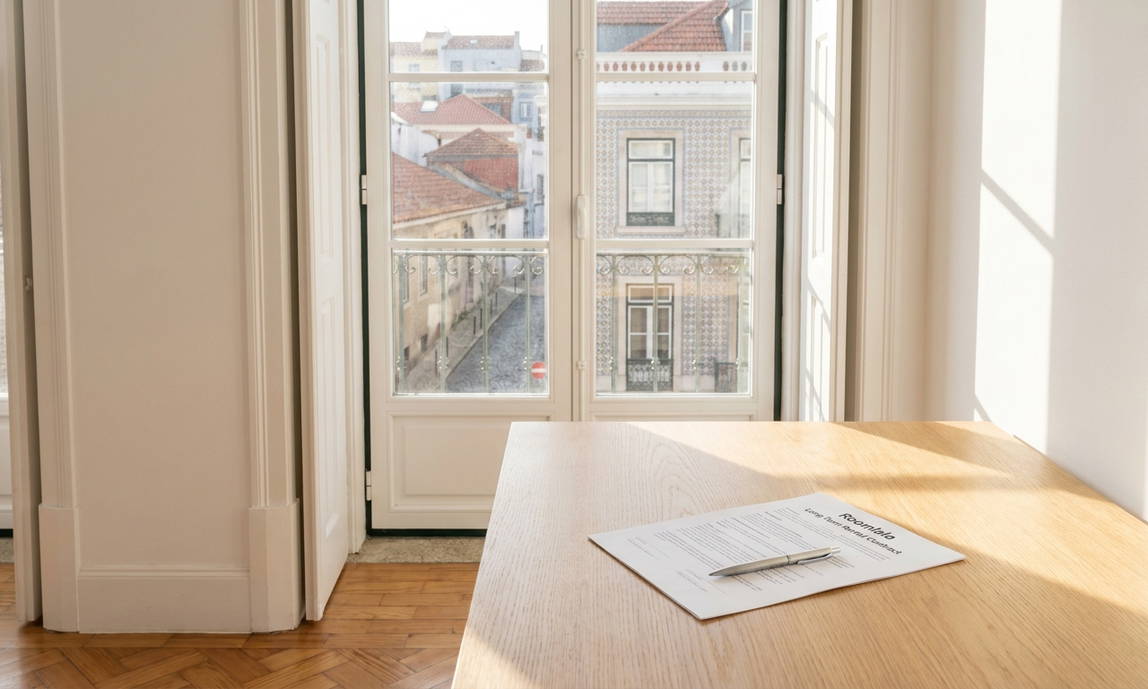
If you own property in Portugal, you have likely noticed that the tide is turning in the short-term vacation rental market. In recent years, the legislative framework surrounding Alojamento Local (AL)—the essential license required to host vacationers—has tightened significantly. As of August 2026, the situation has reached a tipping point. Municipalities are cracking down, inspections are on the rise, and the profitability of short-term rentals is being eroded by new legal and tax obligations. At Roomlala, we support thousands of hosts daily who are questioning the future of their investments. Given the new 2026 Alojamento Local restrictions, a valid question arises: what if the most serene and profitable solution was to return to the basics by renting out a room in your home long-term? This article decodes the recent upheavals in Portuguese housing law and explains why long-term room rental has emerged as the ideal alternative to secure your rental income while benefiting from highly advantageous tax treatment.
Alojamento Local 2026: Understanding the New Portuguese Regulatory Landscape
The framework governing vacation rentals in Portugal has undergone profound changes. To understand the current stakes, it is crucial to distinguish between national-level decisions and those applied locally by municipalities. The government has sought a balance between property rights and the housing crisis, but the result on the ground is a real headache for investors.
Read also: Shared housing in Wallonia: New lease rules for young professionals in 2026, New CIN regulations in Italy: Why hosts are turning to shared housing in 2026 and Youth Rental Voucher 2026: How to benefit from rental assistance for a room in Spain
The End of National Licenses and the Transfer of Power to Municipalities
The first shock came with Decree-Law 76/2024. This text officially ended the national and blanket suspension of Alojamento Local licenses introduced by the previous Mais Habitação law. On paper, this looked like good news for owners, as the law also made existing AL licenses permanent and once again transferable upon the sale of a property. However, the devil is in the details: this same decree transferred regulatory and restrictive power directly to municipalities. City councils now have the final say on whether to authorize new tourist activities in their jurisdictions. Faced with public outcry over the lack of affordable housing, most major cities have chosen the path of severe restriction.
The very recent Decree-Law 151/2026, published on July 30, 2026, has further solidified this. This text extends the deadline until December 31, 2026, for municipalities with more than 1,000 Alojamentos Locais to define their own rules (known as municipal regulations, or RMAL). In concrete terms, what does this mean? It allows these municipalities to simply suspend the issuance of any new registration licenses until the end of the year. For an owner buying an apartment in Lisbon, Faro, or Porto today with the hope of turning a profit on Airbnb, the risk of being denied a license has become almost certain.
Lisbon and Porto: The Lock-down of Absolute Containment Zones
The situation is even more radical in the country's two largest metropolitan areas. In 2025 and 2026, Lisbon and Porto updated their municipal regulations (RMAL) to establish absolute containment zones. These zones cover the vast majority of historic centres and popular tourist districts. Within these areas, the ratio between the number of tourist rentals and residential homes has far exceeded the tolerance thresholds set by the city councils. The direct consequence is that it is now de facto impossible to obtain a new AL license in these districts. The Portuguese housing law is clear: absolute priority is being given back to permanent housing.
Let's take a concrete example: if you own a large apartment in the Baixa district of Lisbon or Ribeira in Porto, and you did not already have an AL license before these restrictions, you can no longer rent your property by the night. You must necessarily turn to other rental models. This is exactly where renting a room long-term in Lisbon becomes not only a legal requirement but also a fantastic opportunity to rethink your rental strategy in a more sustainable way.
The Regulatory Stranglehold on Platforms
Beyond Portuguese borders, all of Europe is tightening the screws. European Regulation 2024/1028, which came into full effect on May 20, 2026, imposes drastic rules on online booking giants like Airbnb, Booking, and Vrbo. These platforms are now under the legal and technical obligation to automatically and without notice remove any short-term rental listing that does not provide a valid legal registration number (RNAL) or has a fraudulent number.
This European harmonization marks the end of the underground tourist rental economy. Cross-referencing of data between platforms and the Portuguese tax authority (Finanças) is now automated. Attempting to rent out a short-term stay without a valid AL license in 2026 exposes you not only to the removal of your listing but also to colossal fines that can reach tens of thousands of euros. At Roomlala, we advocate for serene and 100% legal rentals, which is why we encourage owners to turn to the homestay model—a model perfectly framed and supported by the state.
Growing Constraints for Existing AL Owners
You might be thinking: I already have my AL license, so I am safe. Think again. While the national law has safeguarded existing licenses to reassure long-term investors, it has in return increased compliance obligations and administrative checks. Maintaining a tourist rental business in 2026 requires an increasingly heavy investment of time and money.
Drastic Safety and Insurance Standards
Municipalities, under pressure from co-ownership associations, now impose extremely strict fire safety standards for Alojamentos Locais. Extinguishers inspected annually, fire blankets, illuminated emergency signage, and sometimes even fire doors are required during surprise inspections. Furthermore, the obligation to subscribe to specific multi-risk insurance covering damage caused to common areas by your tenants has become unavoidable. Premiums for these policies have skyrocketed over the last two years due to the rise in incidents in buildings over-occupied by tourists.
Imagine the case of João, who has owned a T3 in Faro operated as an AL since 2018. In 2026, following a municipal inspection, he had to spend nearly 3,000 euros to bring his apartment up to new safety standards, on top of seeing his insurance premium double. Faced with these fixed costs eating into his profitability and the stress of inspections, João finally decided to pivot his business to rent two of his rooms to students on an annual basis. A transition that has allowed him to regain his peace of mind.
The Burden of Reporting to SEF/AIMA
The other downside of Alojamento Local in 2026 remains the bureaucracy linked to national security. Every arrival of a foreign tourist must be reported in detail to the Immigration and Borders Service (now managed under the aegis of AIMA) within three days. Collecting ID documents, entering data into often-overloaded government portals, and the risk of fines for missing a report turn owners' daily lives into a full-time administrative job. By opting for a long-term room rental, you sign a single lease agreement for several months, or even years, thus completely eliminating this daily reporting chore.
Long-Term Room Rental: The Ideal and Profitable Alternative
Faced with this obstacle course, more and more Portuguese owners and expats are turning to a solution that is both old and remarkably modern: renting out part of their primary residence. Renting a room in your home on a long or medium-term basis offers major structural advantages that perfectly address the constraints of Alojamento Local 2026.
Explosive Demand to Rent Rooms Long-Term in Lisbon and Porto
Portugal is going through an unprecedented housing crisis. Local and international students (notably through the Erasmus program), young professionals, and digital nomads are struggling immensely to find affordable housing in major urban centers. The query to rent a room long-term in Lisbon is breaking records on search engines. By making an unused room in your house or apartment available, you are meeting a critical societal need while ensuring a 100% occupancy rate.
Unlike tourist rentals, which are highly seasonal (with winter months often being slow), renting a room to a student or a young professional guarantees you a fixed monthly income, twelve months a year. No more stress from last-minute cancellations, repeated cleaning fees between each traveler, and the exorbitant commissions of management companies. You regain control of your property and your profitability.
Security and Administrative Simplicity with Roomlala
At Roomlala, we have designed our platform to make your life as easy as possible. Transitioning from Alojamento Local to a homestay does not require any complex municipal license. You are simply renting out part of your primary residence, which falls under the standard civil code regarding residential leases. We provide you with clear room rental contract templates that are compliant with the current Portuguese housing law.
Furthermore, security is at the heart of our approach. Unlike the incessant flow of strangers generated by short-term rentals, renting on Roomlala allows you to carefully select your tenant. You can exchange messages with them before they arrive, verify their profile, and agree on shared living rules (kitchen use, schedule, cleaning). It is a deeply human experience, based on mutual respect, that moves away from soulless mass hospitality.
Taxation of Room Rentals in Portugal: Massive Advantages in 2026
If there is one argument that should definitively convince you to take the step towards long-term rentals, it is taxation. The Portuguese state, eager to put more housing back on the residential market, has implemented an arsenal of highly incentive tax measures for the 2026 budget for owners who rent by the year.
A Reduced 10% IRS Rate for Affordable Rents
This is the great revolution in the taxation of room rentals in Portugal in 2026. Traditionally, rental income (rendimentos prediais) was taxed at an autonomous rate of 28%, or 25% for standard long-term leases. Now, the government has massively strengthened the Affordable Rental Programs (Programas de Arrendamento Acessível). If you agree to rent your room while respecting the rent ceilings set by these municipal programs (which remain very reasonable given the market), your personal income tax (IRS) rate drops drastically to just 10%.
Let’s do the math: if you rent a room for €450 per month in Lisbon under the Alojamento Local regime (assuming you have the license), your income is subject to a complex simplified regime which, when coupled with potential VAT, platform fees (15% to 20%), cleaning costs, and water/electricity bills inflated by tourists, reduces your net margin to almost nothing. By renting that same room for €400 per month to a student on a long-term lease with the 10% IRS rate, your net income in pocket is often higher, with infinitely less effort and management cost.
The Tax Deduction Bonus for Your Tenants
The new 2026 Portuguese housing law doesn't just benefit owners; it also pampers tenants, making your offer even more attractive. Tenants with a lease agreement registered with Finanças see their tax deduction ceiling for rental expenses increase to €900 per year (compared to much lower amounts in previous years). This means a young professional or student will have a major financial incentive to sign a real long-term lease agreement with you rather than looking for precarious sublets. This tax advantage builds tenant loyalty and secures your payments, as they will need your official receipts (recibos de renda) for their own tax returns.
Exemption from the Extraordinary Contribution on AL (CEAL)
Finally, let’s not forget the sword of Damocles hanging over Alojamento Local owners: the famous Extraordinary Contribution on Alojamento Local (CEAL). Although its application has been debated and modified, owners of tourist licenses in high-demand areas remain subject to increased local taxes (such as the aggravated IMI). By switching your property back to a standard residential rental or a homestay, you simply fall out of the scope of these punitive taxes. You once again become a valued player in local housing, supported by public policies instead of being penalized.
In conclusion, the year 2026 marks a decisive turning point for real estate in Portugal. The Alojamento Local 2026 restrictions, sealed by the recent July decrees, are not a dead end, but rather an invitation to rethink your strategy. Long-term room rental is emerging as the path of wisdom: it frees you from suffocating administrative constraints, guarantees you stable and predictable income, and offers you unbeatable tax benefits. At Roomlala, we are ready to support you in this transition. Publish your listing today, discover trusted tenant profiles, and give new meaning to your real estate investment while actively participating in resolving the housing crisis in Portugal.




There are no comments yet.
Leave a comment
You must be logged in to post a comment.