
 SEARCH
 LIST YOUR PROPERTY
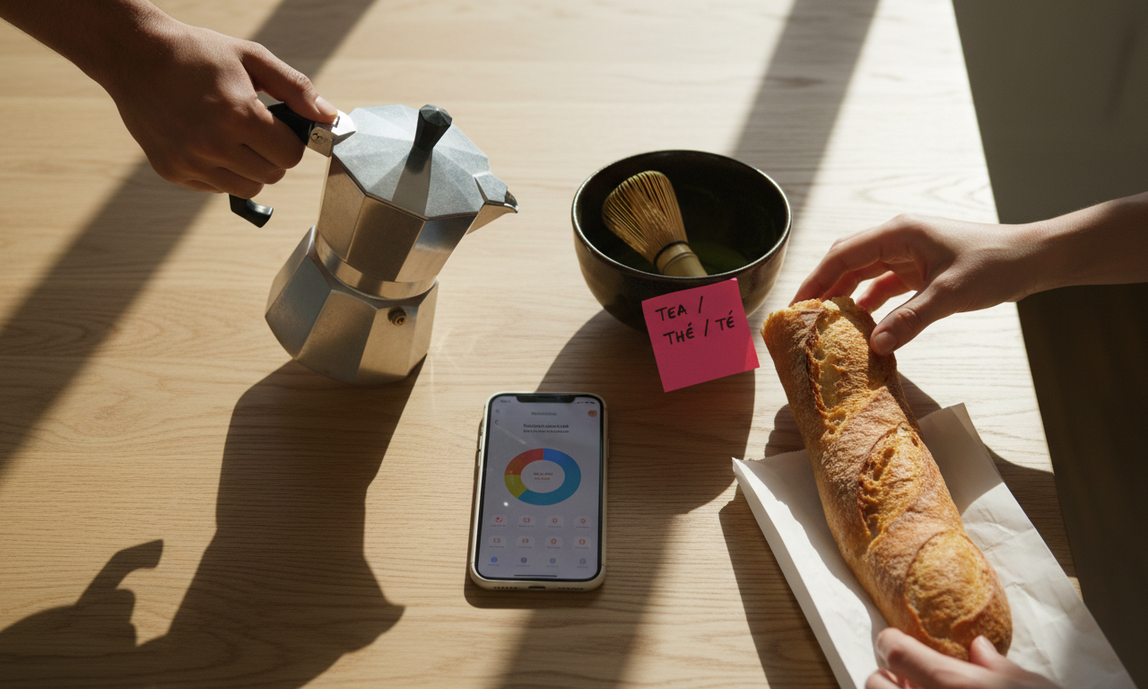
In 2026, with an increasingly tight housing market and a growing search for meaning, traditional roommating is evolving. Gone are the days of simply splitting bills! The big trend of the year is multicultural roommating. At Roomlala, we're seeing a real boom in these international shared apartments where foreign students, young expat professionals, and curious locals come together. But how can you transform this Tower of Babel into a true haven of peace and personal enrichment? Whether you're a future tenant or a host offering a homestay, we'll guide you step by step to succeed in this exceptional human adventure.
1. The Boom of International Roommating: A Societal Phenomenon in 2026
An Economic Solution to Housing Inflation
In 2026, the strain on the rental market continues unabated. With an average rent easily exceeding 500 euros for a room in France, and nearing 750 euros in the capital, finding affordable accommodation often feels like an uphill battle. At Roomlala, we've observed that roommating is becoming the number one fallback solution, not only for students but also for young professionals who want to maintain their purchasing power.
Read also: Parcoursup 2026: Why secure your student shared housing as early as June?, Youth Rent Subsidy fall 2026: How to finance your shared housing in Spain and 2026 CROUS admission results: What to do if you didn't get student housing?
However, the novelty lies in the profile of the roommates. International students, who represent an increasingly significant portion of the student population, are massively turning to this lifestyle. Gone is the cliché of the isolated foreign student in a tiny maid's room. Today, demand is shifting towards large shared spaces, thereby creating vibrant and lively multicultural roommating situations.
Homestays also benefit from this positive dynamic. Many homeowners choose to open their doors to international profiles to ensure a regular supplementary income, while intellectually travelling from the comfort of their living room.
Use case: Let's take Lucas, a young professional from Lyon. By choosing to rent a room in a shared accommodation with a Spanish student and a Japanese researcher, he not only reduced his housing budget by 30% compared to a single studio apartment, but he also divided fixed expenses (internet, electricity, tenant insurance) by three. He thus enjoys a large 40m² living room that he never could have afforded on his own.
Personal enrichment at the heart of shared living
While the financial aspect is often the trigger, it's the human experience that builds tenant loyalty. Multicultural shared accommodation is a true school of life. It allows you to challenge your habits, develop empathy, and broaden your worldview daily, without having to cross borders.
Language learning is one of the most obvious benefits of this lifestyle. Practising English, Spanish, or Mandarin daily, during breakfast or while cooking, offers total immersion that traditional courses cannot match. At Roomlala, we also strongly encourage our users to mention the languages they speak and those they wish to learn in their listings.
Culinary diversity, discussions of ideas, and the discovery of new festive traditions (such as celebrating Thanksgiving, Lunar New Year, or Mid-Autumn Festival) transform daily life into a permanent celebration of diversity.
Practical example: Sarah, a French student, wanted to perfect her English before a crucial internship in London. By joining a shared accommodation with two British students and an American via our platform, she set up "English only" evenings twice a week. Result: she achieved a perfect score on her language test (TOEIC), all while delighting her flatmates with her mastery of French gastronomy.
2. Our practical tips for perfect harmony in daily life
Budget and task management: the key to peace
Living with people from different cultures means encountering varied conceptions of money, cleanliness, or organization. To prevent a multicultural dream from turning into a logistical nightmare, communication must be transparent and benevolent from day one. We recommend establishing clear rules even before moving in.
Using shared budget management mobile applications is absolutely essential in 2026. They help smooth out common expenses (cleaning supplies, basic groceries, streaming platform subscriptions) without having to ask for what's owed at the end of each month, thus avoiding unnecessary tensions.
Regarding apartment maintenance, implementing a visual rotating chore schedule, displayed in common areas, remains the most remarkably effective method. It's important to take the time to understand each person's cleanliness standards and find common ground that ensures the comfort of all residents.
Tip and Use Case: Create a monthly "shared pot" of 20 to 30 euros per person for purely collective purchases. For example, in the shared accommodation of Maria (Mexican), John (American), and Chloé (French), this shared pot is used to buy oil, salt, toilet paper, but also to fund a large international meal prepared together once a month. This definitively eliminates frustrations like "who finished my milk?"
Respecting Rhythms and Cultural Differences
The relationship to time, noise, and the concept of privacy varies considerably from one country to another. In some Mediterranean or Latin American cultures, dining at 10 p.m. with background music is the absolute norm. Conversely, a Scandinavian or Asian roommate might seek complete quiet by 8 p.m. to recharge.
It is therefore crucial to establish a tacit "noise curfew" during the week and to jointly define rules regarding hosting outside guests. At Roomlala, we often remind our community that one person's freedom ends where another's restful sleep begins.
Space arrangement also plays a major role in this harmony. Ensure that everyone has a strictly respected private space (their room) while valuing common living areas for chosen, rather than endured, moments of sharing.
Concrete example: In a mixed-gender shared accommodation in Bordeaux, Hiroshi, a Japanese student, woke up very early for his classes, while Diego, a young Spanish professional, often worked nights remotely. They established a rule of "quiet hours" between 11 p.m. and 7 a.m., and jointly invested in Bluetooth headphones for the living room television. Furthermore, they use a whiteboard in the entryway to note their unusual weekly schedules and to inform others of friends visiting.
3. The Legal and Administrative Aspect: Securing Your Shared Accommodation in 2026
Let's now address a crucial topic: legislation. In 2026, the legal framework for shared accommodation is well-structured, but it demands strict adherence, especially when hosting international profiles. At Roomlala, the security of your processes is our absolute priority. Whether you opt for a single lease with a solidarity clause or for individual leases, you must understand their subtleties.
The individual lease (often for furnished accommodation) is widely favoured in multicultural shared accommodations. It allows each tenant to rent a specific room and have access to common areas, without being financially responsible for potential unpaid rents from others. This is a very reassuring format for an international student. Furthermore, for furnished rentals, the notice period for departure is only one month, offering ideal flexibility for study stays or short internships.
Regarding government assistance, the good news for 2026 is the confirmed revaluation of APL (Personalized Housing Assistance) as of April 1st. International students are entitled to it just like French citizens, under certain conditions:
- Hold a valid residence permit (for students from outside the European Union).
- Have a lease in their own name.
- Open a French bank account to receive payments from the CAF.
Legal use case: Consider Elena, an Italian student arriving in Paris. Her landlord opted for a one-year individual furnished lease, generated 100% securely. To compensate for the lack of a physical guarantor in France, Elena used the Visale guarantee from Action Logement (completely free and available to foreigners under 30). Her French roommate helped her translate and fill out her online CAF application, allowing her to quickly receive her APL (housing benefits). At Roomlala, we support our hosts so they can confidently accept these institutional guarantees.
4. Homestay: The Friendly and Reassuring Alternative
Beyond traditional flatsharing among tenants of the same generation, homestays are experiencing a true golden age in 2026. This hybrid accommodation option particularly attracts international students during their first few months in France. It combines the security of an established home with a complete and welcoming cultural immersion.
For the property owner (the host), it's a fantastic opportunity to monetize an unoccupied room while intellectually travelling without leaving home. Host profiles are increasingly varied: young retirees seeking companionship, single-parent families wanting to introduce their children to a foreign language, or active young couples with a large urban apartment.
The advantages for the international tenant are immense. They arrive in a fully equipped accommodation, are freed from the administrative burdens associated with setting up utilities (water, electricity, internet box), and, most importantly, benefit from the knowledgeable advice of a local to discover the ins and outs of the city, transportation tips, and often complex French administrative procedures.
Concrete example: Martine, a lively young retiree living in Strasbourg, has been renting out her spare room on Roomlala for three years. In September 2026, she hosted Kenji, a Japanese architecture student. Not only does she charge him a moderate rent that pleasantly supplements her retirement pension, but they've also established a wonderful exchange ritual: on Thursday evenings, Kenji gives Martine an introductory calligraphy lesson, and on Sunday afternoons, she teaches him the secrets of authentic Alsatian choucroute. This is the very essence of what we advocate for: a win-win, human exchange, made secure by our platform which manages payments and structures agreements.



There are no comments yet.
Leave a comment
You must be logged in to post a comment.